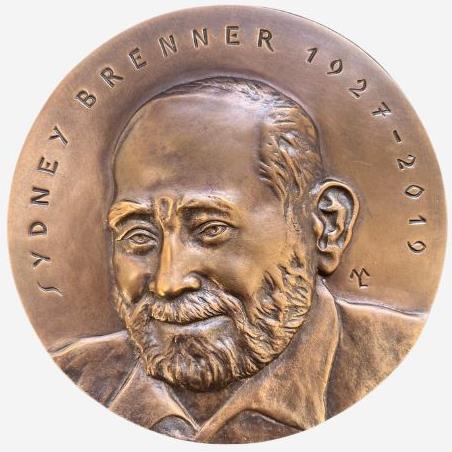
The 2026 Sydney Brenner Prize
of the Academia Europaea#
The Academia Europaea are pleased to award a SYDNEY BRENNER Medal for achievements in the Life Sciences, to
Professor Meritxell Huch MAE#
Max Planck Institute of Molecular Cell Biology and Genetics (MPI-CBG)#
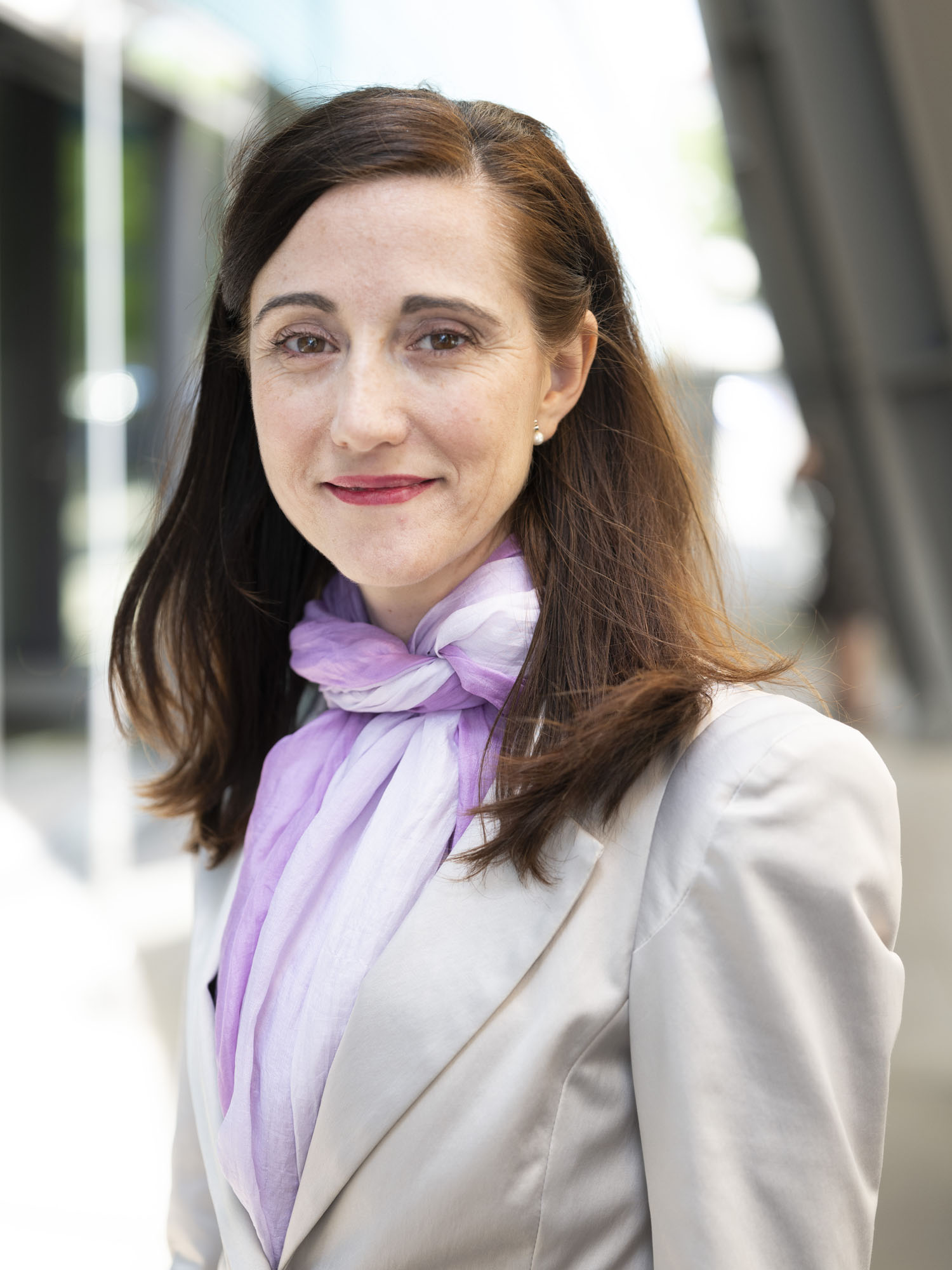
(© Sven Doering)
The medal is given to honour the best in scholarship and personal achievements within a period of not more than 20 years after obtaining the PhD degree (with allowance for career breaks). The award is given to an individual scholar in the field of molecular biology and related disciplines. The Medal is awarded at the Annual Conference of the Academy and on that occasion the recipient will deliver a ‘Sydney Brenner’ lecture.
The Academia Europaea Sydney Brenner Medal was established in 2022 to commemorate Sydney Brenner, one of the greatest scientists of the 20th century and one of the founding members of the Academia Europaea.
Professor Huch will receive the medal and will deliver the accompanying lecture at the annual conference of the Academia Europaea, Budapest, on October 14th, 2026.
Lecture title: “Organoid models and their applications in biomedical research”#
Brenner Medal Citation#
Professor Dr Meritxell Huch MAE has been awarded the 2026 Brenner medal in recognition of her transformative contributions to the field cell biology, contributions that profoundly embody the pioneering spirit and scientific vision of Sydney Brenner.
Prof. Huch is a pioneering leader in stem cell biology whose work has fundamentally transformed our ability to culture, study, and apply tissues in vitro. Her development of long-term expandable organoid systems from adult tissues has overcome a central limitation in cell biology-the Hayflick limit-and enabled entirely new avenues in biomedical research, drug discovery, and personalized medicine. Overall, her discoveries have removed a major barrier in biomedical science and established a versatile platform with far-reaching global impact, exemplifying the transformative innovation recognized by the Sydney Brenner Medal.
Synopsis#
For decades, it was accepted that primary human cells could undergo only a finite number of divisions in vitro while maintaining genetic integrity, restricting research largely to fibroblasts and cancer cells. In a series of landmark studies, Prof. Huch overturned this paradigm by recreating key in vivo signalling environments in vitro. She demonstrated that adult cells from stomach, liver, and pancreas can be expanded long-term while preserving both genetic stability and tissue-specific function (Cell Stem Cell 2010, Nature 2013; EMBO Journal 2013, Cell 2015; Nature Protocols 2016). This breakthrough established the foundation of human organoid technology and enabled sustained access to physiologically relevant human material.
Prof. Huch rapidly translated this advance into impactful biomedical applications. She pioneered the first human liver organoid models of inherited liver diseases, including Alpha-1-antitrypsin deficiency (Hepatology International 2020) and contributed to organoid-based modelling of Alagille syndrome (Gastroenterology 2018), and developed organoid systems for liver and pancreatic cancers (Cell 2015; Nature Medicine 2017). These models faithfully recapitulate disease biology and have been used to predict patient-specific drug responses, providing early proof-of-principle for organoid-guided precision medicine. Prof. Huch continues to push the boundaries of the field. Recently, she has demonstrated the expansion of adult human hepatocytes from multiple patients, while retaining in vivo functionality, which represents a major advance for drug discovery, toxicology, and predictive testing of hepatotoxicity (Nature 2026). In parallel, she has advanced organoid complexity through the development of multicellular assembloids that capture tissue architecture, cellular interactions and model fibrosis (Nature 2025; Nature 2026, Cell Reports 2026), which represents major steps toward faithfully modelling complex human liver diseases.
Prof. Huch is uniquely distinguished as the first to establish long-term expandable organoid systems from three human tissues-stomach, liver, and pancreas-an achievement that underscores the breadth and originality of her contributions. Her work has fundamentally reshaped human cell biology by overcoming longstanding limitations in culturing primary human tissues, enabling the expansion of patient-derived material as a scalable and physiologically relevant resource. This breakthrough has transformed disease modelling, drug development, toxicology, regenerative medicine, and precision therapeutics across academia and industry, replacing key dependencies on animal models.
General biography#
https://www.mpi-cbg.de/research/researchgroups/currentgroups/meritxell-huch/group-leader
Short Bio synopsis of Prof Huch#
Affiliation: Max Planck Institute of Molecular Cell Biology and Genetics (MPI-CBG), Pfotenhauerstraße 108, 01307 Dresden, Germany
Researcher unique identifier(s):
ORCID-ID: 0000-0002-1545-5265
Scopus Author ID: 15750457900
Education
- 1996 - 2001 B.Sc. in Pharmacology and Pharmaceutical Sciences, University of Barcelona, Spain
- 2002 - 2003 M.Sc. in Biomedicine, University of Barcelona, Spain
- 2003 - 2007 Ph.D. in Biomedicine, Center for Genomic Regulation (CRG), Barcelona, Spain
Personal Statement
My lab and myself, we have made seminal contributions to the field of adult stem cells, tissue regeneration and cancer. I pioneered the development of stomach, liver and pancreas organoid cultures from adult tissues. As independent group leader, my group was the first one to develop the human versions of liver and pancreas organoids as well as pioneered the establishment of liver organoids for disease modelling, particularly human liver monogenic diseases and liver cancer. Our research program is not only focused on development and improvement of organoid culture systems but also exploits these systems to elucidate basic biological questions in developmental biology, tissue regeneration and cancer. Our work on human tissues has the potential to dissect the cellular and molecular mechanisms underlying the development of human organs, human regeneration and the pathogenic mechanisms of human diseases.
Scientific Training/Positions
- 05/2025 - present Member of the German National Academy of Sciences Leopoldina
- 05/2024 - 04/2028 Honorary Professor, Technische Universität Dresden, Germany
- 01/2024 - present Program Dean, International Max Planck Research School (IMPRS) for Cell, Developmental and Systems Biology, Dresden, Germany
- 05/2022 - present Max Planck Director, Max Planck Institute of Molecular Cell Biology and Genetics, Dresden, Germany
- 2019 - 2022 Lise Meitner Max Planck Research Group Leader, Max Planck Gesellschaft, Dresden, Germany
- 2014 - 2020 Sir Henry Dale Wellcome Trust Group Leader, The Gurdon Institute, University of Cambridge; Affiliated Group Leader at The Wellcome Trust/MRC Cambridge Stem Cell Institute; Member of the Department of Physiology, Developmental Biology and Neurosciences, University of Cambridge, UK
- 2008 - 2014 Postdoctoral Fellow (Marie Curie Fellow-IEF), Hubrecht Institute for Developmental Biology and Stem Cell Research, Utrecht, The Netherlands; Advisor: Prof Hans Clevers
- 2003 - 2007 PhD Student (Spanish Ministry of Health fellow), Centre for Genomic Regulation (CRG), Barcelona, Spain; Advisor: Dr Cristina Fillat
- 2002 - 2003 Master of Advanced Studies Student (Catalan government fellow), Centre for Genomic Regulation (CRG), Barcelona, Spain; Advisor: Dr Cristina Fillat
- 2000 - 2001 Student Internship (Final year student fellow), Department of Biochemistry and Molecular Biology, School of Pharmacy, University of Barcelona, Spain
Prizes and Awards
- 2025 Clarivate Highly Cited Researcher 2025 (Cross-Field)
- 2025 Elected member of the German National Academy of Sciences Leopoldina
- 2024 Otto Bayer Award (Bayer Foundation)
- 2023 Elected EMBO member
- 2023 ERC Consolidator Award
- 2022 Hilde Mangold Award. German Stem Cell Network (GSCN)
- 2019 The BINDER Innovation Prize. German Society for Cell Biology (DGZ)
- 2018 Researcher of the Year. Cambridge Independent Science and Technology Awards
- 2018 EMBO Young Investigator Award
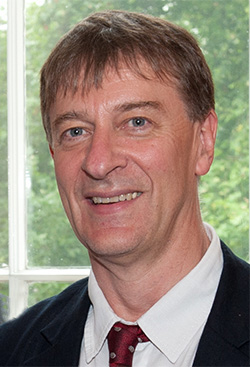
Laudator for the prize#
Professor Phil Ingham FRS, MAE will give the laudation at the award ceremony.
Posted 11th August 2026 by Academia Europaea.